Spacious and Cosy – How to Create Balance in Your Interior Design


Spacious and Cosy – How to Create Balance in Your Interior Design
A home should feel both comfortable to live in and practical for everyday life. But how do you design a space that feels open and airy while still being warm and inviting – without it becoming cluttered or cold? The key lies in balancing function, aesthetics, and atmosphere. Here’s how to create a home that feels harmonious, with room for calm, life, and personality.
Start with the room’s purpose
Before you start rearranging furniture or buying new pieces, think about what the room is actually for. A living area that doubles as a workspace and a play zone needs a different layout from one that’s purely for relaxing.
- Define zones – divide the space into functional areas, such as a reading nook, dining spot, or home office. Use rugs, lighting, or furniture placement to mark the transitions between them.
- Think about flow – make sure there’s enough space to move around easily. A room feels more spacious when you can walk freely without bumping into furniture.
- Choose multifunctional furniture – a sofa bed, a coffee table with storage, or a bench that doubles as seating and shelving can make a big difference.
Once the room’s purpose is clear, it becomes much easier to design a space that’s both practical and welcoming.
Læs også:



Light and colour set the mood
Light and colour have a huge impact on how a room feels. Pale shades make a space seem larger and brighter, while deeper tones add warmth and depth.
- Make the most of natural light – position mirrors to reflect daylight and avoid heavy curtains that block it out.
- Layer your lighting – combine ceiling lights, floor lamps, and table lamps to create flexible illumination. A mix of light sources makes a room feel warmer and more dynamic.
- Play with colour contrasts – a neutral base with a few colourful accents creates balance. Too many bold colours can feel overwhelming, while too much white can seem stark.
A simple trick is to choose a cohesive colour palette that runs through your walls, textiles, and accessories. It ties everything together and creates a sense of calm.
Add warmth with texture and materials
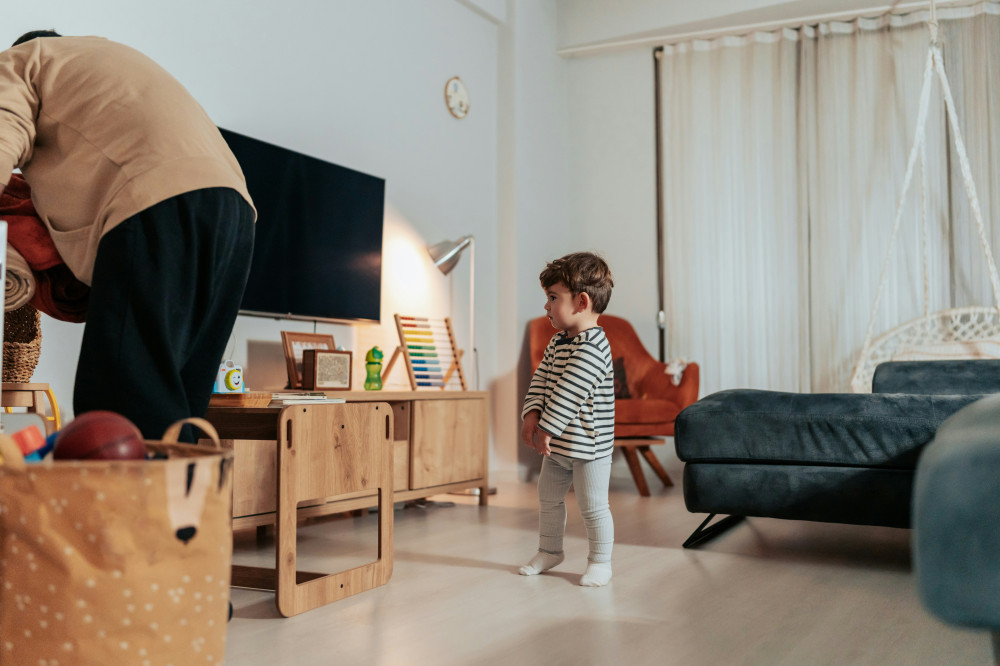
A cosy room appeals to the senses. Soft fabrics, natural materials, and small tactile details make a big difference.
- Layer your textiles – throws, cushions, and rugs add warmth and make a space more inviting.
- Mix materials – wood, wool, ceramics, and metal bring variety and depth.
- Bring in greenery – houseplants add life, fresh air, and a touch of nature indoors.
Even small changes – like swapping a glass coffee table for a wooden one or adding a woven basket – can transform the atmosphere.
Declutter – but keep your personality
Minimalism can create a sense of calm, but a home without personal touches can feel sterile. The goal is to find the balance between order and character.
- Give things space – when there’s room around furniture and decorations, the space feels larger.
- Be selective – keep the items that mean something to you and let them take centre stage.
- Use storage smartly – baskets, drawers, and cupboards can hide the practical bits, keeping the visual impression tidy.
A home with personality tells a story – your story – without feeling overcrowded.
Let nature inspire you
Nature is a great model for balance. It combines structure and spontaneity in a way that feels harmonious.
- Incorporate natural colours – greens, beiges, and earthy tones create a sense of calm.
- Celebrate daylight – a room that changes with the light feels alive.
- Use natural materials – wood, stone, and linen bring an organic feel that suits most styles.
When you let nature guide your design choices, your home will feel both relaxed and balanced.
Create balance over time
A harmonious home rarely comes together overnight. It evolves with you and your daily life. Give yourself time to see how the space works, and adjust as you go. Move a lamp, swap artwork, or try a new wall colour – small changes can make a big difference.
Ultimately, creating balance in your interior design is about finding the rhythm between practicality and personality. When your rooms both function well and feel right, your home becomes a place where you can truly thrive.
Læs også: